
The mouse is your primary interface with the computer, and issues like lag, freezing, intermittent unresponsiveness, or incorrect button functions can cripple productivity and gaming performance. While physical damage can sometimes be the cause, these input problems are overwhelmingly rooted in outdated, corrupted, or conflicting mouse drivers (HID – Human Interface Device), or interference from core system settings.
Updating your mouse driver is the most effective solution for resolving these input issues. A successful update requires not only installing the correct driver but also ensuring a stable system foundation. This guide provides systematic, step-by-step solutions for updating and stabilizing your mouse driver on Windows 10 and 11.
Part I: Driver Integrity and System Synchronization
A responsive mouse relies on a clean driver environment, including the mouse hardware, the USB controller, and the system chipset. Conflicts in these areas directly cause lag and input issues.
Automated Driver Update with Driver Talent X
Manually troubleshooting and updating the various HID, USB Controller, and Chipset drivers can be complex, especially with specialized gaming or ergonomic mouse. A specialized utility automates this process, guaranteeing that all necessary components are perfectly synchronized, often resolving deep-seated input lag issues instantly.
Preparation:
Ensure your mouse (wired or receiver) is plugged in.
Download and install the Driver Talent X application onto your Windows PC.
Run Scan:
Launch the application and go to "Drivers" > "Scan", click "Scan".
The software will perform a deep analysis of your system, focusing on peripheral and controller drivers.
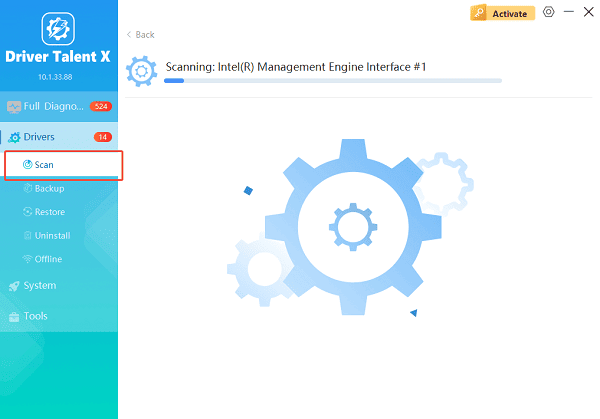
Execute Update:
After the scan is complete, the software will display a list of all drivers that need attention. Select the necessary drivers and click the "Repair Now" button.
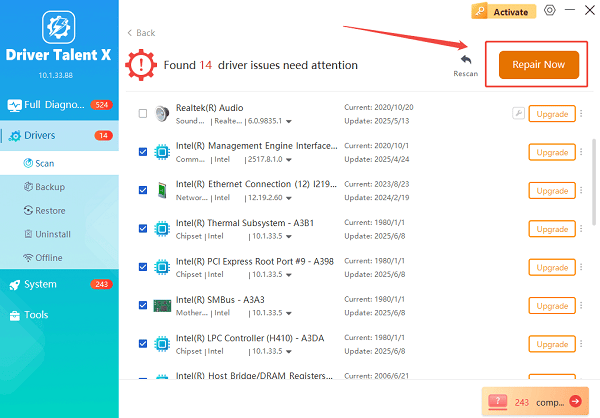
Driver Talent X will download the latest, certified versions specific to your mouse and Windows version, crucial for minimizing latency.
Finalize:
After the installation is complete, restart your computer and test the mouse's responsiveness.
Part II: Safe Driver Reinstallation and System Checks
These steps address direct driver conflicts and common system settings that interfere with input devices.
Method 1: Reinstallation via Device Manager
This is the standard and safest way to force Windows to remove the current problematic driver and load a fresh, clean version.
Press Windows Key + X and select "Device Manager".
Expand the "Mice and other pointing devices" category.
Right-click on your mouse entry (e.g., "HID-compliant mouse").
Select "Uninstall device".
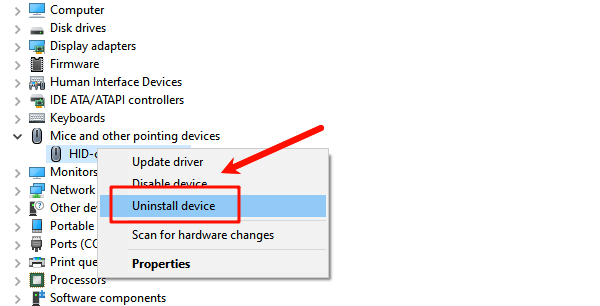
Do NOT check the box that says "Delete the driver software for this device".
In the Device Manager menu, click "Action" > "Scan for hardware changes". Windows will automatically detect the device and load a fresh driver copy.
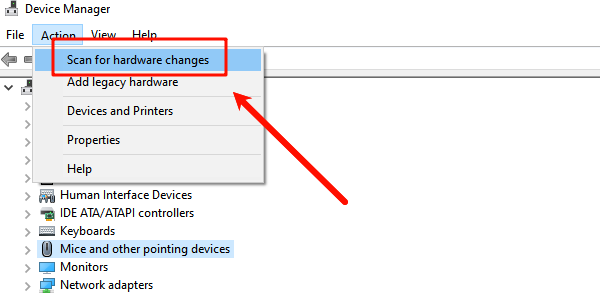
Restart the PC to finalize the reinstallation.
Method 2: Disable Power Saving for USB Ports
Windows often puts USB ports (and any connected peripherals) to sleep to save power, which frequently causes intermittent unresponsiveness or lag upon waking.
Press Windows Key + X and select "Device Manager".
Expand the "Universal Serial Bus controllers" category.
Right-click on any "USB Root Hub" entry and select "Properties".
Go to the "Power Management" tab.
Uncheck the box that says "Allow the computer to turn off this device to save power".
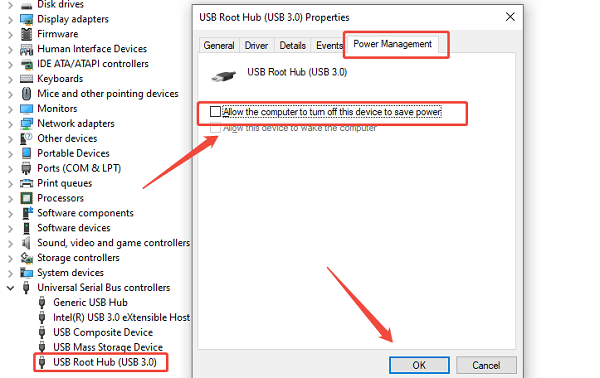
Click "OK". Repeat this process for all USB Root Hub entries.
Part III: Configuration and Accessibility Fixes
These solutions address Windows accessibility and configuration settings that can unintentionally throttle or alter mouse behavior.
Method 1: Check Mouse Pointer Speed and Acceleration
Incorrect settings in the Control Panel can make the mouse feel erratic or unresponsive.
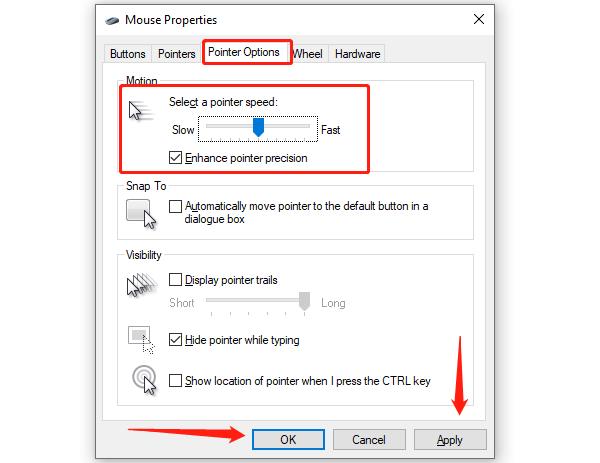
Press Windows Key + R and type "main.cpl". Press Enter.
Go to the "Pointer Options" tab.
Adjust the "Pointer speed slider" to a comfortable level.
Check the status of "Enhance pointer precision". (Disabling this feature removes acceleration, which is often preferred by gamers for consistent input.)
Method 2: Disable Filter Keys and Sticky Keys
Accessibility features designed to help users with physical challenges can cause normal input to be delayed or ignored if enabled accidentally.
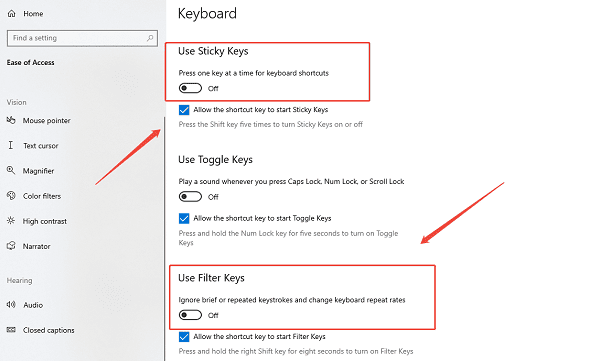
Press Windows Key + I to open Settings.
Navigate to "Accessibility" > "Keyboard" (or "Ease of Access" on older Windows versions).
Ensure the "Sticky Keys" and "Filter Keys" toggle switches are both set to "Off".
Conclusion
Mouse lag and unresponsiveness are typically symptoms of driver conflicts and system-level interference. The most reliable method is to first ensure driver stability and synchronization across your entire system with Driver Talent X.
By combining this foundational fix with a clean reinstallation via Device Manager, disabling USB Power Saving, and checking core Pointer Options settings, you can systematically eliminate common conflicts and restore smooth, high-speed input.
See also:
Epson L3250 Driver Download & Installation Guide for Windows 10/11
How to Update BIOS on MSI Motherboard – Step-by-Step Guide